Heat Pump Repair & Maintenance: Keeping Your System Efficient Year‑Round
Heat Pump Repair & Maintenance: Keeping Your System Efficient Year‑Round
In Colorado communities like Aurora, Denver, Parker, Englewood, Littleton, Centennial, Castle Rock and Greenwood Village, heat pumps keep homes comfortable through both the summer heat and winter cold. These systems are efficient because they move heat rather than generate it. However, Colorado’s climate can be tough on equipment, and without routine care a heat pump can lose efficiency or fail when you need it most.
Common Heat Pump Problems
Refrigerant leaks: Heat pumps rely on the correct refrigerant charge to absorb and release heat. Low refrigerant reduces efficiency and can cause coils to ice over. Because refrigerant is handled under pressure and requires specialised tools, only a certified technician should repair leaks and recharge the system.
Compressor failures: The compressor is the heart of a heat pump. Loud grinding or humming noises, difficulty starting or frequent cycling may indicate a failing compressor. Replacing a compressor is complex and, in older units, may not be cost‑effective. A professional can diagnose whether repair or replacement is the best option.
Defrost cycle issues: In winter the outdoor coil can accumulate frost. Heat pumps occasionally switch to defrost mode to melt ice. If the defrost sensor or control board malfunctions, ice can build up and restrict airflow. Signs include visible ice on the outdoor unit, reduced heating output and higher energy bills.
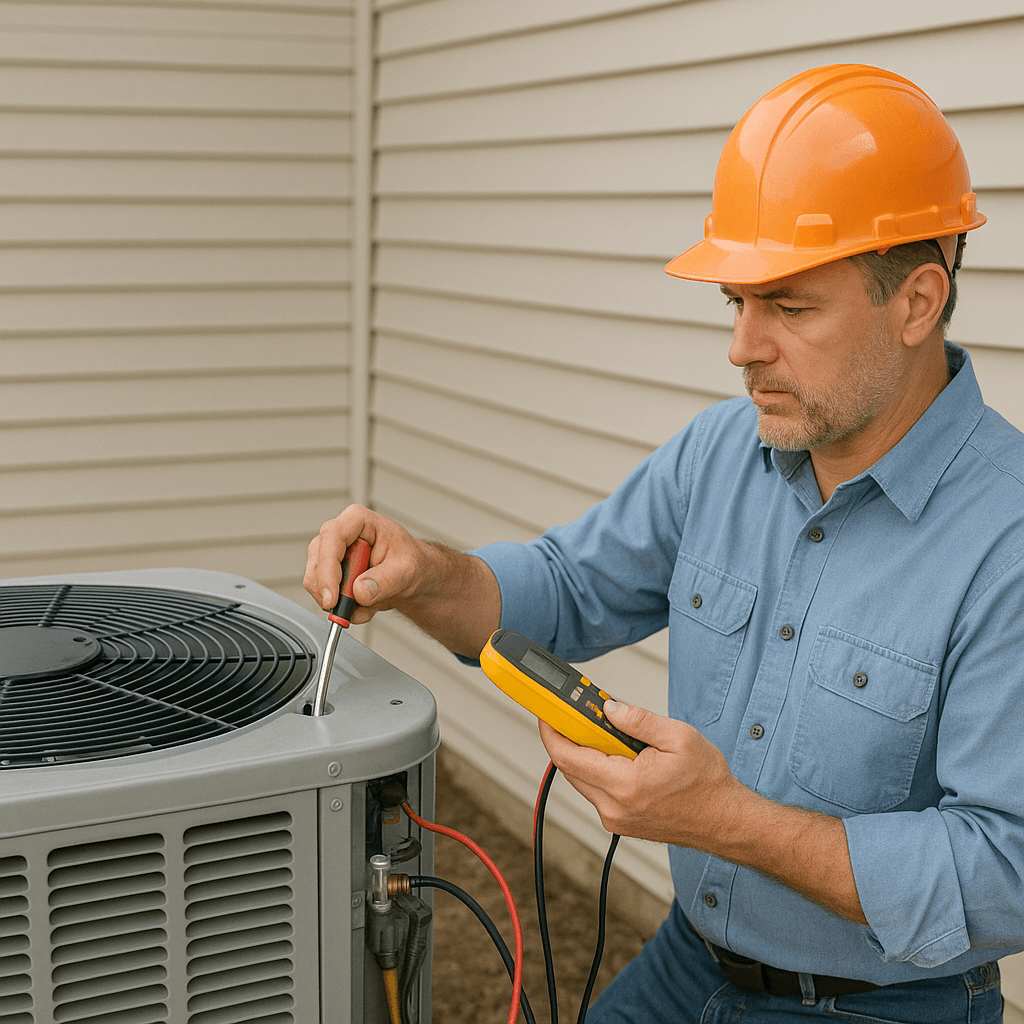
Electrical problems: Faulty capacitors, contactors or loose wiring can prevent the system from switching modes or starting. Electrical issues often cause humming noises, blown fuses or tripped breakers. These problems should be addressed promptly to avoid damage to other components.
Thermostat issues: A miscalibrated or incorrectly programmed thermostat can cause short cycling and uneven temperatures. Check your thermostat settings and replace batteries regularly. Upgrading to a programmable or smart thermostat improves accuracy and efficiency.
Maintenance Tasks for Reliability
Routine maintenance reduces the likelihood of repairs and keeps your system running at peak efficiency. Some tasks you can perform yourself, while others should be handled by a technician:
- Clean or replace air filters: Dirty filters restrict airflow and cause the system to work harder. Replace disposable filters every one to three months, or clean reusable filters monthly.
- Clear outdoor debris and clean coils: Keep the area around the outdoor unit free of leaves, grass and dirt. Gently hose off coils to remove dust (with power off).
- Inspect and clean indoor coils: Dust and dirt on evaporator coils reduce heat transfer. A technician can clean these coils during a tune‑up.
- Check refrigerant levels and lines: Low refrigerant indicates a leak, which must be repaired before recharging. A technician will also check insulation on refrigerant lines.
- Inspect electrical connections: Loose or corroded wires can cause erratic performance. Technicians tighten connections and test capacitors and contactors.
- Test the defrost cycle: Your service provider will ensure the defrost sensor and control board are working correctly so ice doesn’t build up.
- Calibrate thermostat and controls: Verify the thermostat is reading temperature accurately and adjust settings for seasonal efficiency.
A professional tune‑up should be scheduled twice a year: once in spring before the cooling season and once in autumn before the heating season. Regular maintenance extends your heat pump’s lifespan, reduces energy consumption and maintains manufacturer warranties.
When to Call a Professional
Homeowners can change filters and clear debris, but you should call a licensed HVAC technician if you notice:
- Ice buildup on the outdoor unit or refrigerant lines.
- Loud or unusual noises when the system starts or runs.
- The system fails to switch from heating to cooling or vice versa.
- Frequent cycling or inconsistent temperatures.
- Sudden spikes in energy bills.
Prompt attention prevents minor issues from becoming major repairs and keeps your home comfortable year‑round.
Call to Action: At Alloy Heating & Cooling, we specialise in heat pump installation, repair and maintenance. Our certified technicians handle refrigerant leaks, compressor replacement, seasonal tune‑ups and emergency repairs. We serve Aurora, Denver, Parker, Englewood, Littleton, Centennial, Castle Rock and Greenwood Village with professionalism and respect for your home. Contact us today to schedule service or learn about our maintenance plans.
Frequently Asked Questions (FAQ)
How often should I service my heat pump? Heat pumps should be professionally serviced twice a year: once in spring before the cooling season and once in autumn before the heating season. Regular tune‑ups keep your system efficient and prevent unexpected breakdowns.
Why does my heat pump ice up in winter? A small amount of frost is normal, but thick ice indicates a problem. Possible causes include low refrigerant, restricted airflow due to dirty filters or coils, and faults in the defrost sensor or control board. Turn the system off and call a technician if ice covers the outdoor unit.
Can I repair a heat pump myself? Homeowners can change filters and clear debris, but refrigerant leaks, compressor replacement and electrical repairs require specialised tools and training. DIY repairs can damage your system or void the warranty.
When should I replace my heat pump instead of repairing it? Most heat pumps last 10–15 years. If your unit is more than a decade old and needs an expensive repair, such as a compressor replacement, your technician may recommend replacement. Newer models are often more energy‑efficient and offer better cold‑climate performance.
Are heat pumps efficient in Colorado’s cold winters? Modern heat pumps are designed to operate efficiently in temperatures well below freezing. Cold‑climate models can provide heat down to around 5 °F. However, extremely cold spells may require supplemental heating or dual‑fuel systems.

Alloy HVAC Team
HVAC experts with years of experience in the industry. We share tips, insights, and the latest trends in heating, ventilation, and air conditioning to help you maintain optimal comfort in your home or business.