Furnaces and Carbon Monoxide: What Colorado Homeowners Need to Know to Stay Safe
Furnaces and Carbon Monoxide: What Colorado Homeowners Need to Know to Stay Safe
Colorado’s cold winters mean furnaces work overtime to keep homes and businesses warm. While modern heating systems are designed for safety and efficiency, carbon monoxide (CO) remains a real risk, especially in older or poorly maintained equipment. At Alloy Heating and Cooling, we believe every homeowner and small business should understand how to protect their household, employees, and customers from the dangers of carbon monoxide.
Understanding Carbon Monoxide in Furnaces
What is Carbon Monoxide?
Carbon monoxide is a colorless, odorless, and tasteless gas. It is produced whenever fuels like natural gas, propane, oil, wood, or coal are burned. Because you cannot smell or see it, CO is often called the “silent killer.” Even small amounts can build up indoors and cause serious health problems, or even death, if left undetected.
How Furnaces Produce Carbon Monoxide
Most Colorado homes and commercial spaces use natural gas or propane furnaces. When working properly, furnace combustion is efficient, and CO is safely vented outside. However, if combustion is incomplete or venting is blocked, carbon monoxide can leak into your living or working spaces. Poorly maintained or aging systems are more likely to develop issues that result in CO production.
Why Colorado Homes Are at Risk
Our state’s weather means homes and buildings are often tightly sealed to keep out the cold. While this improves energy efficiency, it can also trap carbon monoxide inside if a leak occurs. Additionally, Colorado’s higher elevations mean less oxygen is available for combustion, which increases the risk of incomplete burning and CO production. Real-world scenario: One Greenwood Village homeowner called Alloy Heating and Cooling after experiencing headaches and fatigue. An inspection revealed their older furnace was producing CO due to a blocked flue. Luckily, their quick action prevented a serious situation.
Common Causes of Carbon Monoxide Leaks in Furnaces
Cracked Heat Exchangers
The heat exchanger is a critical furnace component separating combustion gases from indoor air. Over time, metal fatigue, corrosion, or overheating can cause cracks. These cracks allow CO and other combustion gases to escape into your ducts and circulate throughout your home or business. In Littleton, we replaced a 20-year-old unit with a cracked exchanger. The homeowner had noticed strange odors and higher-than-normal heating bills, classic warning signs of trouble.
Blocked or Dirty Furnace Vents
Vents and flues carry combustion gases safely outdoors. Snow, ice, animal nests, debris, or even disconnected vent pipes can block these pathways. When venting is obstructed, CO can back up into your home. In Highlands Ranch, a blocked vent caused by birds nesting in the chimney led to CO levels triggering a detector. Prompt vent cleaning and a new cap solved the problem and kept the family safe.
Poor Furnace Installation or Maintenance
Improper installation, such as incorrect vent sizing or loose connections, increases the risk of CO leaks. Skipping annual maintenance allows small problems to go unnoticed until they become serious. Alloy Heating and Cooling has seen many cases in Aurora and Parker where new homeowners inherited poorly installed furnaces, only to discover CO leaks during their first winter. Regular inspections are your best defense.
Signs of Carbon Monoxide in Your Home
Physical Symptoms to Watch For
Because CO is undetectable by human senses, symptoms are often the first sign of a problem. Warning symptoms include:
- Unexplained headaches
- Dizziness or lightheadedness
- Nausea or vomiting
- Fatigue or confusion
- Shortness of breath
- Blurred vision
Symptoms may improve when you leave home and return when you come back. In severe cases, CO poisoning can cause loss of consciousness or death. In a recent case in Castle Rock, a family of four experienced flu-like symptoms that resolved at work and school but returned at home. A CO detector eventually revealed dangerous levels from a failing furnace.
Furnace Warning Signs
Your furnace itself may offer clues to a CO problem. Look for:
- Yellow or flickering flames (instead of steady blue)
- Soot or scorch marks around the furnace or vents
- Excess moisture on windows or walls near the furnace
- Rusting on pipes or appliance jacks
- Unusual smells, such as burning or chemical odors
If you see any of these signs, turn off your furnace, ventilate the space if possible, and call a professional right away.
How to Prevent Carbon Monoxide Exposure from Your Furnace
Essential Furnace Maintenance Tips
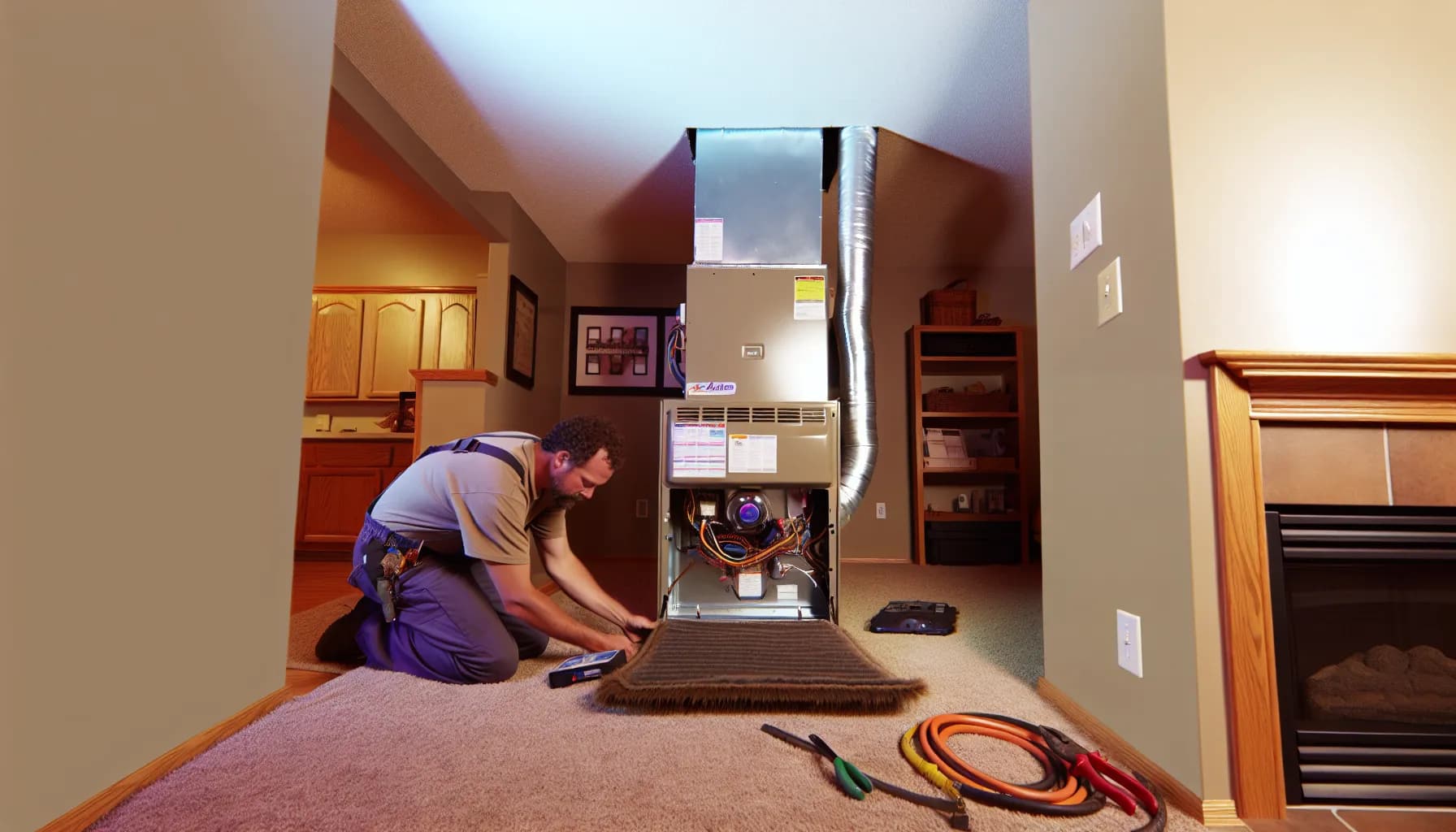
Regular maintenance is the best way to reduce your risk of CO leaks. Here’s what Alloy Heating and Cooling recommends for Colorado homeowners and businesses:
- Annual professional inspections: Schedule a full furnace check-up every year, ideally before cold weather sets in. Our technicians inspect heat exchangers, burners, vents, and safety controls.
- Keep vents and chimneys clear: Check outdoor vent pipes for obstructions, especially after snowstorms or wind.
- Replace air filters: Dirty filters restrict airflow and can cause furnaces to overheat. Change filters as recommended by your manufacturer, usually every 1-3 months.
- Address repairs quickly: Don’t ignore strange noises, poor performance, or warning signs. Fast repairs can prevent bigger issues down the line.
In Englewood, a business owner’s annual maintenance appointment uncovered a deteriorating vent pipe. By replacing it before the heating season, they avoided a potentially dangerous situation for staff and customers.
Installing and Testing Carbon Monoxide Detectors
Even with the best maintenance, no system is 100% foolproof. That’s why CO detectors are a must for every home and business with a fuel-burning furnace, water heater, fireplace, or attached garage.
- Install detectors on every level of your home and near sleeping areas.
- Test detectors monthly and replace batteries as needed.
- Replace detectors every 5-7 years, or as recommended by the manufacturer.
In Centennial, a CO detector installed in the hallway outside bedrooms alerted a family to a problem during a winter storm, allowing them to evacuate before anyone became seriously ill.
When to Call a Professional
If you suspect a carbon monoxide leak, don’t try to tackle it alone. Evacuate, call 911, and then contact a certified HVAC professional like Alloy Heating and Cooling. Our technicians have the tools and expertise to diagnose, repair, and test your system for safety. Whether it’s an emergency or routine maintenance, we serve communities across the Denver metro and Front Range, from Boulder to Castle Rock and beyond.
Colorado Laws and Recommendations for Furnace Safety
State Requirements for Carbon Monoxide Detectors
Colorado law requires carbon monoxide detectors in all homes and commercial buildings with fuel-burning appliances or attached garages. This includes homes in Greenwood Village, Denver, Lakewood, Thornton, and all surrounding areas. Detectors must be installed within 15 feet of sleeping areas, and landlords are responsible for providing them in rentals.
Failure to comply can lead to fines and puts residents at serious risk. When selling or renting a property, proof of detector installation is required by law.
Best Practices for Colorado Homeowners
- Schedule annual furnace inspections and maintenance with a trusted, licensed HVAC company.
- Install and maintain carbon monoxide detectors as required by law.
- Educate your family, employees, or tenants about CO risks and emergency procedures.
- Never use ovens, grills, or portable generators indoors for heat.
- Keep vents, chimneys, and flues clear of snow, debris, and animals.
- Act quickly if a detector sounds or you notice symptoms. Evacuate and call for help.
Homeowner story: In Broomfield, a landlord worked with Alloy Heating and Cooling to upgrade all rental units with new CO detectors and ensured every furnace was inspected before the winter rental season. This not only protected tenants but gave everyone peace of mind.
Conclusion
Carbon monoxide is a serious threat, but with the right knowledge and proactive steps, Colorado homeowners and businesses can keep their spaces safe and comfortable. If you have questions about your furnace or need professional maintenance, Alloy Heating and Cooling is here to help. We proudly serve Greenwood Village, Littleton, Highlands Ranch, Castle Rock, Denver, Boulder, and all surrounding communities. Stay safe, stay warm, and let us handle your heating system with the care and expertise you deserve.
Frequently Asked Questions
How can I tell if my furnace is leaking carbon monoxide?
Look for unexplained headaches, dizziness, or nausea, and check for yellow or flickering furnace flames, soot around the furnace, or excess moisture on windows. Install a carbon monoxide detector for early warning.
How often should I have my furnace inspected for carbon monoxide leaks?
It’s recommended to have your furnace professionally inspected at least once a year, ideally before the heating season begins.
Are carbon monoxide detectors required in Colorado homes?
Yes, Colorado law requires carbon monoxide detectors in homes with fuel-burning appliances, including furnaces, or attached garages.
What should I do if my carbon monoxide detector goes off?
Immediately evacuate everyone from the home and call 911. Do not re-enter until professionals declare it safe.
Can an electric furnace produce carbon monoxide?
No, electric furnaces do not produce carbon monoxide. Only furnaces that burn fuel, such as natural gas, oil, or propane, can generate carbon monoxide.

Alloy HVAC Team
HVAC experts with years of experience in the industry. We share tips, insights, and the latest trends in heating, ventilation, and air conditioning to help you maintain optimal comfort in your home or business.