Carbon Monoxide and Your Furnace: How to Keep Your Colorado Home Safe
Carbon Monoxide and Your Furnace: How to Keep Your Colorado Home Safe
Living in Colorado means relying on your furnace to keep your home warm during our long, cold winters. But with comfort comes responsibility: understanding the risks of carbon monoxide (CO) and knowing how to protect your family and property. At Alloy Heating and Cooling, we’ve seen firsthand how carbon monoxide leaks can create dangerous situations for homeowners and businesses throughout Greenwood Village, Englewood, Littleton, and the greater Denver area. This comprehensive guide will help you understand CO risks, recognize warning signs, and take action to keep your Colorado home safe.
Understanding Carbon Monoxide in Furnaces
What is Carbon Monoxide?
Carbon monoxide is a colorless, odorless, and tasteless gas produced whenever fuel like natural gas, propane, oil, or wood is burned. Because you can’t see or smell CO, it’s often called the “silent killer.” Even low levels of exposure can cause serious health problems, especially for children, elderly adults, and pets.
How Furnaces Can Produce Carbon Monoxide
Most Colorado homes rely on gas furnaces for heat. When a furnace operates properly, it burns fuel efficiently and safely vents combustion gases, including carbon monoxide, outside. However, if something goes wrong, such as a cracked heat exchanger or blocked flue, CO can escape into your living space instead of being vented safely away.
Why Colorado Homes Are at Risk
Our cold climate means furnaces run for many hours each day during the fall, winter, and early spring. Colorado’s high-altitude areas (like Denver, Boulder, and Castle Rock) can also complicate combustion and venting, especially in older homes or those with outdated heating equipment. Tight, energy-efficient homes without proper ventilation can further increase the risk by trapping gases indoors.
Common Causes of Carbon Monoxide Leaks in Furnaces
Cracked Heat Exchangers
The heat exchanger is a critical component in your furnace. It separates the combustion gases from the air that circulates through your home. Over time, metal fatigue, corrosion, or overheating can cause cracks or holes. A cracked heat exchanger allows CO to mix with your indoor air. At Alloy Heating and Cooling, we’ve discovered cracked heat exchangers during routine inspections, saving families in Highlands Ranch and Aurora from potentially life-threatening situations.
Poor Ventilation and Blocked Flues
Furnaces rely on a flue or vent system to safely carry combustion gases outside. Birds, rodents, nests, leaves, or even snow and ice can block these vents. Blocked flues force gases back into your home. We’ve responded to emergency calls in Littleton and Centennial after homeowners noticed strange odors or moisture near their furnace, only to find the flue blocked by debris.
Improper Furnace Installation or Maintenance
Incorrectly installed furnaces or DIY repairs can lead to serious CO hazards. For example, using the wrong size vent pipe or skipping essential seals can allow gases to escape. Lack of regular maintenance means issues like dirty burners or failing components go unnoticed. Our certified technicians in Greenwood Village and Parker often find that skipped annual tune-ups are the root cause of CO risks.
Signs of Carbon Monoxide in Your Home
Physical Symptoms to Watch For
Carbon monoxide poisoning often mimics common illnesses. Watch for symptoms such as:
- Headaches
- Dizziness or confusion
- Nausea or vomiting
- Shortness of breath
- Fatigue or weakness
If multiple people (or pets) experience these symptoms at the same time, especially when the furnace is running, it’s a red flag. We’ve had homeowners in Westminster and Commerce City call us after entire families felt ill, only to find elevated CO levels in their home.
Visual and Smell Indicators
While carbon monoxide itself has no smell or color, there are indirect signs to look for:
- Yellow or flickering furnace flames (instead of steady blue)
- Soot or scorch marks around furnace or vents
- Excess moisture on windows or walls near your furnace
- Rust on the vent pipe or heat exchanger
Unusual odors like burning or mustiness may signal incomplete combustion, though not every CO issue has a noticeable smell. Still, any unusual change in your furnace’s operation deserves immediate attention.
How to Test for Carbon Monoxide
The best way to detect CO is with properly installed carbon monoxide detectors. Place detectors near sleeping areas and on every level of your home, especially close to your furnace or utility room. Test the alarms monthly and replace batteries at least once a year. Our technicians in Golden and Morrison often recommend interconnected CO detectors that alert you throughout the home if one goes off, providing an extra layer of safety.
Preventing Carbon Monoxide Leaks from Your Furnace
Importance of Regular Furnace Maintenance
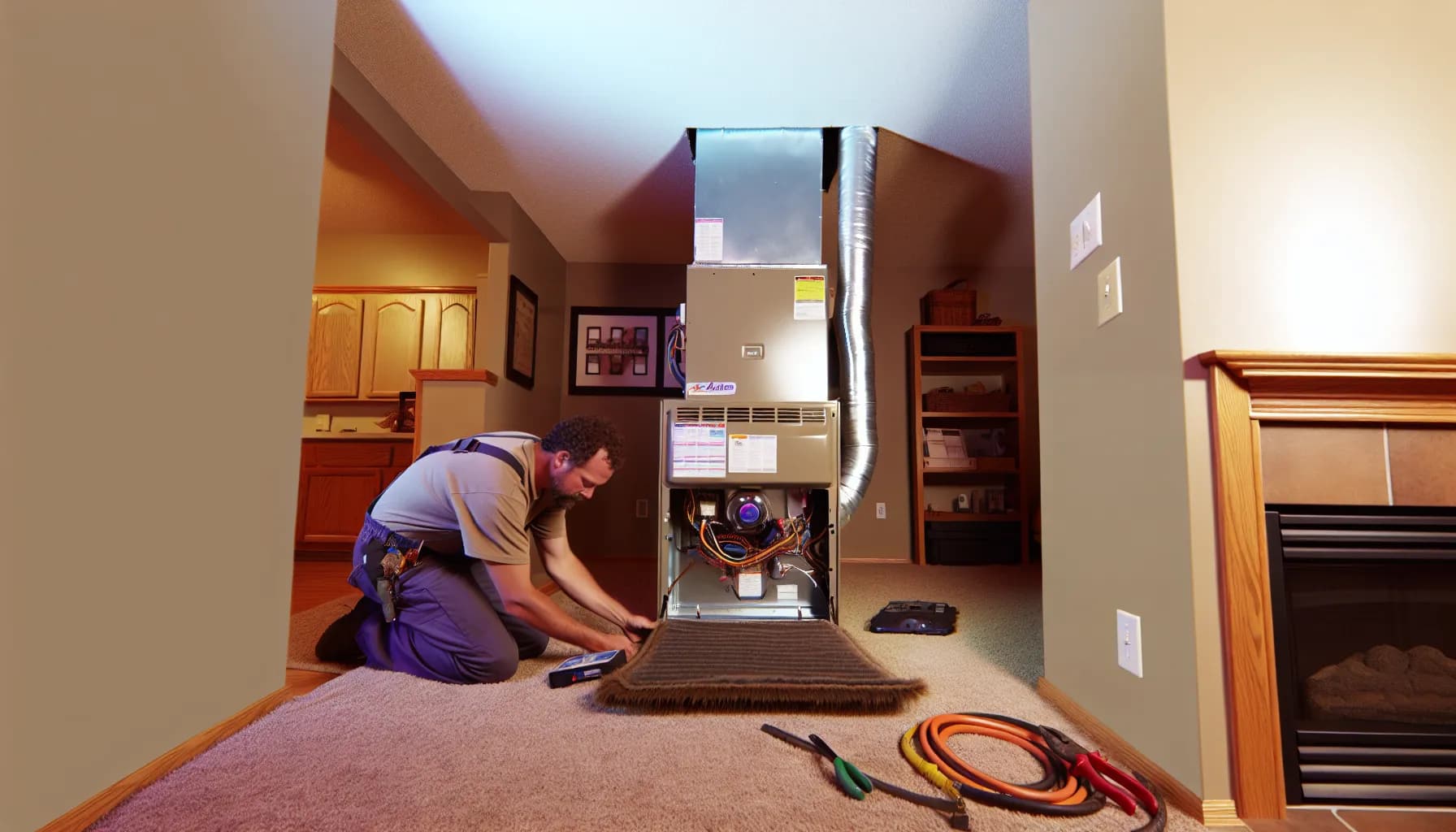
Annual professional maintenance is your best defense. During a tune-up, our certified HVAC technicians:
- Inspect the heat exchanger for cracks or corrosion
- Clean burners and ignition systems
- Check and clean flue pipes and venting
- Test for proper combustion and carbon monoxide levels
- Verify all safety controls are working
This thorough inspection helps catch small problems before they become hazardous. One Greenwood Village family’s annual maintenance uncovered a small crack in their heat exchanger, which we replaced before CO could become a danger.
Installing and Testing Carbon Monoxide Detectors
CO detectors are not optional in homes with fuel-burning appliances. Colorado law requires them in all new homes and in existing homes being sold. Install detectors:
- On every floor and near sleeping areas
- Within 15 feet of fuel-burning appliances
- In utility rooms, basements, or garages with furnaces or water heaters
Test your detectors monthly and replace units every 5 to 7 years, or according to manufacturer guidelines. Our team in Boulder and Lafayette often helps homeowners select and install reliable detectors that meet current safety codes.
Safe Furnace Operation Tips
- Never use a gas oven or range for home heating
- Keep the area around your furnace clear of boxes, paint, and flammable items
- Don’t block air intakes or exhaust vents outside your home
- Schedule prompt repairs for any furnace issue, such as odd noises or frequent shutdowns
We’ve seen preventable CO incidents in homes from Castle Pines to Northglenn caused by blocked exterior vents or improper use of appliances.
What to Do If You Suspect Carbon Monoxide in Your Furnace
Immediate Steps to Take
If your carbon monoxide alarm sounds or you suspect a leak:
- Evacuate everyone from the house immediately, including pets
- Leave doors open as you exit to allow fresh air in
- Call 911 from outside or a neighbor’s home
- Do not re-enter until emergency responders say it’s safe
Your safety comes first. We’ve seen families in Arvada and Broomfield avoid tragedy by responding quickly to CO alarms.
When to Call a Professional
After emergency responders clear your home, contact a licensed HVAC company like Alloy Heating and Cooling. Our technicians will perform a thorough inspection to find and fix the source of CO. This may include repairing or replacing the furnace, fixing venting issues, or upgrading safety controls.
Long-term Solutions for Safety
Preventing future problems is critical. Consider:
- Upgrading to a modern, high-efficiency furnace with advanced safety features
- Adding or replacing CO detectors
- Scheduling annual inspections and maintenance visits
- Educating your family or employees about CO risks and emergency response
In one case, a small business in Lakewood upgraded to a sealed combustion furnace after a CO scare, improving indoor safety and energy efficiency.
Conclusion
Carbon monoxide is a serious risk, but it’s one you can manage with proactive care and the right safety steps. Regular furnace maintenance, reliable detectors, and professional support are the keys to protecting your Colorado home or business. If you’re due for an inspection, have concerns about your furnace, or need help installing CO detectors, Alloy Heating and Cooling is here to help. Serving communities from Denver and Aurora to Monument and Palmer Lake, our experts are committed to your safety and peace of mind.
Frequently Asked Questions
How does a furnace produce carbon monoxide?
A furnace can produce carbon monoxide when fuel is not burned completely, often due to issues like a cracked heat exchanger, blocked venting, or poor maintenance.
What are the warning signs of carbon monoxide from my furnace?
Warning signs include flu-like symptoms in occupants, yellow burner flames instead of blue, soot buildup, and frequent pilot light outages.
How often should I have my furnace inspected for carbon monoxide?
It’s recommended to have your furnace professionally inspected and maintained at least once a year, especially before the heating season starts.
Are carbon monoxide detectors necessary if I have a furnace?
Yes, carbon monoxide detectors are essential for any home with a fuel-burning furnace to provide early warning of dangerous CO levels.
What should I do if my carbon monoxide alarm goes off?
If your carbon monoxide alarm sounds, evacuate your home immediately, call 911, and do not re-enter until professionals have deemed it safe.

Alloy HVAC Team
HVAC experts with years of experience in the industry. We share tips, insights, and the latest trends in heating, ventilation, and air conditioning to help you maintain optimal comfort in your home or business.