The Dangers of Carbon Monoxide from Gas Furnaces in Colorado Homes
The Dangers of Carbon Monoxide from Gas Furnaces in Colorado Homes
Living in Colorado means relying on your gas furnace for warmth during our long, chilly winters. While gas furnaces are efficient and reliable, they also carry hidden risks if not properly maintained. Carbon monoxide (CO) is one of the most serious dangers associated with gas furnaces, and it poses a threat to homeowners, renters, and businesses throughout the state. At Alloy Heating and Cooling, we believe awareness and prevention are key to keeping your loved ones safe. Here is everything you need to know about carbon monoxide from gas furnaces in Colorado homes.
What is Carbon Monoxide and How Does it Form in Gas Furnaces?
Understanding Carbon Monoxide
Carbon monoxide is a colorless, odorless, and tasteless gas produced whenever fuel is burned. Because it is impossible to see or smell, CO is often called the “silent killer.” Even low levels of exposure can cause health problems, and high levels can quickly become life-threatening. In homes, the most common sources of carbon monoxide are fuel-burning appliances, including gas furnaces, water heaters, fireplaces, and stoves.
How Gas Furnaces Produce Carbon Monoxide
Gas furnaces work by burning natural gas to create heat. Ideally, this combustion process produces heat, carbon dioxide, and water vapor. However, if the furnace is not operating efficiently, the combustion can become incomplete, leading to the production of carbon monoxide. Factors such as poor ventilation, a dirty burner, or incorrect gas-to-air ratios can all increase the risk of CO formation inside your furnace.
Common Causes of Carbon Monoxide Leaks in Furnaces
- Cracked Heat Exchanger: The heat exchanger is a critical part of your furnace that separates combustion gases from the air that circulates in your home. Over time, heat exchangers can crack due to age or wear, allowing CO to leak into your ductwork.
- Poor Ventilation: Blocked or damaged flue pipes can prevent CO from venting outside, causing it to back up into your living space.
- Improper Installation or Maintenance: DIY installations and skipped maintenance can create dangerous conditions where CO leaks go undetected.
- Dirty Burners or Filters: Accumulation of dirt and debris can disrupt the combustion process and increase CO emissions.
We recently inspected a home in Highlands Ranch where a bird’s nest blocked the furnace’s exhaust vent, causing elevated CO levels inside. Regular checks and proper installation help prevent these scenarios.
Health Risks of Carbon Monoxide Exposure in Colorado Homes
Symptoms of Carbon Monoxide Poisoning
Because carbon monoxide is invisible and odorless, the first sign of a problem is often the onset of symptoms. These can include:
- Headaches
- Dizziness
- Nausea or vomiting
- Shortness of breath
- Fatigue or confusion
- Chest pain
In serious cases, exposure can lead to unconsciousness or death. In one real-world example, a Centennial homeowner experienced persistent headaches and fatigue. After a CO detector alarmed, an Alloy Heating and Cooling technician discovered a cracked heat exchanger leaking CO into the home.
Long-Term Effects on Health
Low-level carbon monoxide exposure over time can cause chronic symptoms such as memory loss, difficulty concentrating, and heart complications. Prolonged exposure is particularly dangerous because it often goes undetected until serious damage has occurred. Children, pregnant women, and elderly residents are at even greater risk from long-term CO exposure.
Vulnerable Populations in Colorado
Certain people are more susceptible to carbon monoxide poisoning, including:
- Infants and young children
- Pregnant women and their unborn babies
- Elderly adults
- People with chronic heart or respiratory conditions
- Individuals with compromised immune systems
Colorado’s high altitude can also exacerbate symptoms, as oxygen levels are already lower than at sea level, making CO poisoning more severe.
Why Colorado Homes Are at Higher Risk for Carbon Monoxide from Gas Furnaces
Altitude and Incomplete Combustion
Colorado’s high elevation affects how gas appliances burn fuel. At higher altitudes, the air contains less oxygen, which means gas furnaces need to be specifically adjusted for proper combustion. Without these adjustments, furnaces can burn inefficiently, increasing the risk of carbon monoxide production. For example, a furnace installed in Boulder without proper altitude calibration can emit higher levels of CO, even if it functions perfectly at sea level.
Weatherization and Air Tightness
Many Colorado homeowners invest in weatherization to keep heating bills down. Tight seals, new windows, and extra insulation all help keep warm air in, but they can also trap combustion gases inside. Modern, tightly sealed homes need proper ventilation to ensure CO is safely vented outdoors. Without adequate airflow, a minor furnace issue can quickly turn into a dangerous CO buildup.
Older Home Heating Systems
Older homes in Denver, Lakewood, and surrounding areas often have aging furnaces that are more likely to develop cracks or leaks. Parts wear out, past repairs may have used outdated methods, and years of use can lead to dangerous conditions. We regularly replace 20- to 30-year-old furnaces in Littleton and Golden that are no longer safe to operate.
How to Prevent Carbon Monoxide Leaks from Gas Furnaces
Importance of Regular Furnace Maintenance
The best way to protect your home from carbon monoxide is through regular professional maintenance. An annual furnace tune-up includes:
- Checking the heat exchanger for cracks or corrosion
- Inspecting and cleaning burners
- Testing the gas-to-air ratio and adjusting for altitude
- Ensuring proper venting and airflow
- Verifying the safety controls and sensors
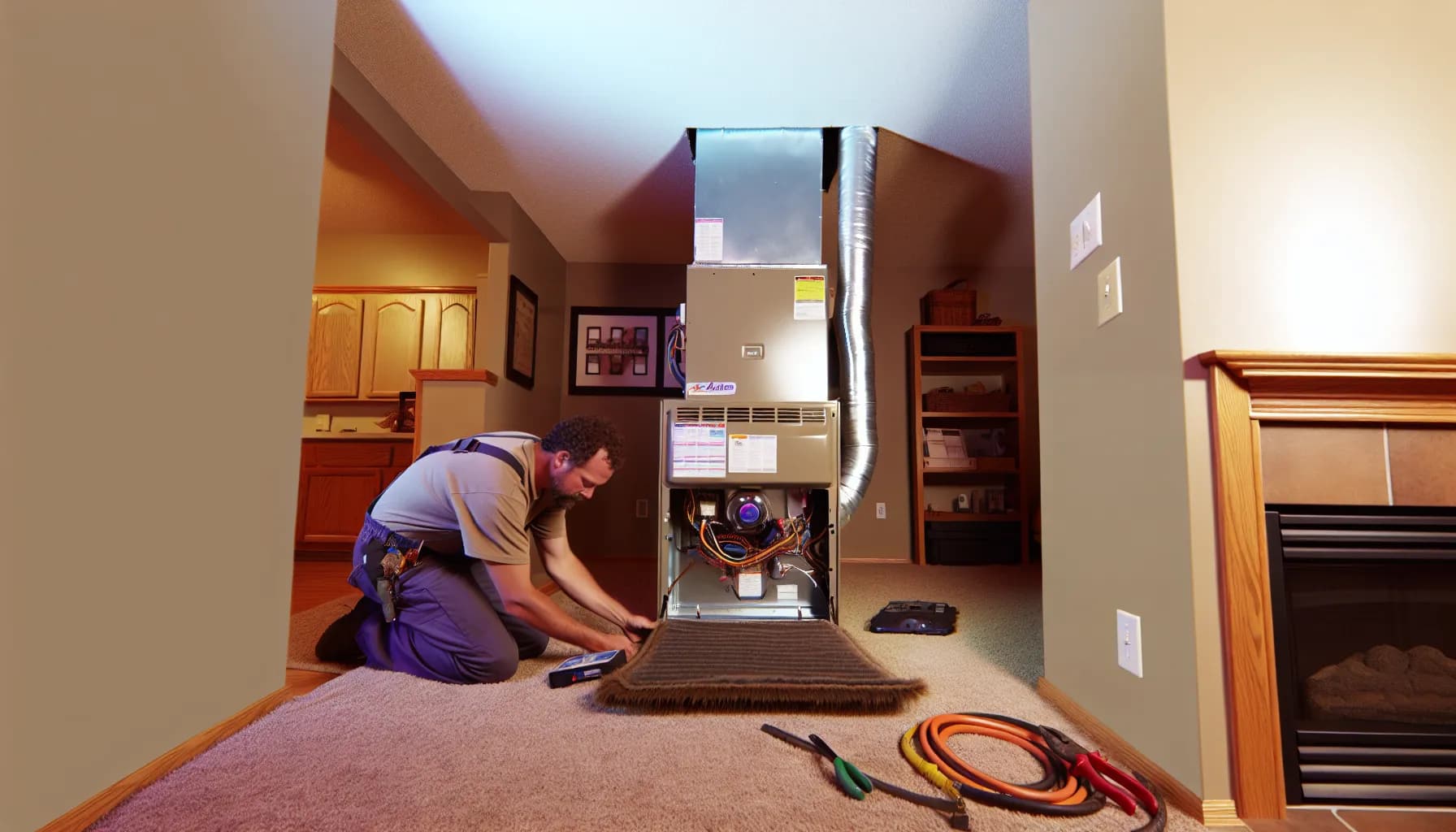
During a routine maintenance call in Parker, an Alloy Heating and Cooling technician identified a faulty vent pipe that could have caused a CO leak in the winter. Timely repairs can make all the difference.
Installing and Testing Carbon Monoxide Detectors
Colorado law requires carbon monoxide detectors in homes with fuel-burning appliances. Install detectors on every level of your home, especially near bedrooms. Test alarms monthly and replace batteries twice a year. Replace the entire detector every 5, 7 years, following manufacturer guidelines. Early detection saves lives.
Professional Inspection and Ventilation Tips
Schedule a professional inspection before the heating season begins. A trained HVAC technician will ensure your system is operating safely and efficiently. Additional tips include:
- Ensure all vents and exhaust outlets are clear of debris, snow, or animal nests
- Never block furnace intake or exhaust vents, even during remodeling
- If your home is tightly sealed, ask about fresh air intake systems to maintain safe indoor air quality
- Replace furnace filters regularly to keep air flowing properly
What to Do If You Suspect Carbon Monoxide from Your Gas Furnace
Recognizing Warning Signs
Besides physical symptoms, look for these warning signs of CO issues:
- Yellow or flickering burner flames (should be steady and blue)
- Soot or scorch marks around the furnace or vents
- Excessive moisture on windows or walls near the furnace
- Carbon monoxide detector alarm sounding
In a recent case in Castle Rock, homeowners noticed their CO alarm sounded only at night. An inspection revealed a partially blocked vent that allowed gases to back up when their furnace ran longer during cold hours.
Immediate Steps to Take
- Evacuate everyone from the home immediately, including pets
- Call 911 or emergency services from outside the home
- Do not re-enter until authorities say it is safe
- Ventilate the home by opening windows and doors if possible, but only if it is safe to do so
When to Call Emergency Services
If anyone in your home is experiencing symptoms of CO poisoning, call emergency services right away. Even if you are unsure, it is better to err on the side of caution. Emergency responders have specialized equipment to detect and resolve CO issues before you return home.
Protect Your Family with Alloy Heating and Cooling
Carbon monoxide is a serious threat, but with awareness and proper precautions, you can keep your Colorado home or business safe. Alloy Heating and Cooling proudly serves Greenwood Village, Englewood, Littleton, Lone Tree, Highlands Ranch, Parker, Southglenn, Castlewood, Aurora, Foxfield, Cherry Hills Village, Centennial, Denver, Lakewood, Wheat Ridge, Arvada, Westminster, Commerce City, Thornton, Northglenn, Castle Pines, Castle Rock, Sedalia, Franktown, Elizabeth, Kiowa, Evergreen, Golden, Morrison, Ken Caryl, Roxborough Park, Bow Mar, Glendale, Sheridan, Federal Heights, Brighton, Broomfield, Erie, Niwot, Lafayette, Louisville, Boulder, Monument, and Palmer Lake. Schedule your annual furnace inspection today and ask us about installing carbon monoxide detectors. Your safety is always our top priority.
Frequently Asked Questions
How can I tell if my gas furnace is leaking carbon monoxide?
Common signs include flu-like symptoms in residents, yellow or flickering burner flame, soot around the furnace, or a carbon monoxide detector alarm. Regular inspections are crucial as CO is odorless and colorless.
Are carbon monoxide detectors required in Colorado homes?
Yes, Colorado law requires carbon monoxide detectors within 15 feet of bedrooms in homes with fuel-burning appliances, including gas furnaces.
How often should I have my gas furnace inspected?
Experts recommend professional furnace inspections and maintenance at least once a year, ideally before the heating season begins.
Can high altitude in Colorado increase carbon monoxide risk from gas furnaces?
Yes, high altitude can affect combustion efficiency, increasing the risk of incomplete combustion and higher carbon monoxide production in gas furnaces.
What should I do if my carbon monoxide alarm goes off?
Immediately evacuate everyone from the home, call 911 or emergency services, and do not re-enter until authorities confirm it is safe.

Alloy HVAC Team
HVAC experts with years of experience in the industry. We share tips, insights, and the latest trends in heating, ventilation, and air conditioning to help you maintain optimal comfort in your home or business.